Free Drop Ceiling Calculator
Estimate drop ceiling tiles, grid materials, boxes, and cost for 2×2 or 2×4 layouts. Get main tees, cross tees, wall molding, and a full material list fast.
Last updated: March 31, 2026
Enter Your Measurements
ft
ft
Quick:
Include grid materials estimate
Add tile price (optional)
Results
33
tiles to order
Boxes Needed:~3 boxes (12/box)
Ceiling Area:120 sq ft
Base Tiles:30 tiles
Extra for Waste:+3 tiles
Calculation Steps
Ceiling Area: 12 × 10 ft= 120 sq ft
Tile Area: 24" × 24"= 4 sq ft
Base Tiles: 120 ÷ 4= 30 tiles
+ 10% Waste: 30 × 1.1= 33 tiles
Project Examples
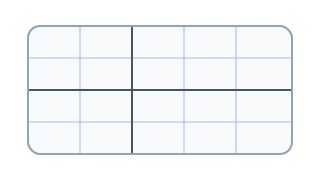
Small Office
10 ft × 10 ft room · 2×2 tile · 10% waste
Tiles
28
Boxes
3
Grid Order
3 main tees · 6 cross tees · 4 wall moldings
A 100 sq ft office usually lands at 28 tiles with waste, which rounds up to 3 standard boxes of 12.
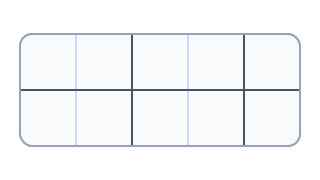
Conference Room
20 ft × 12 ft room · 2×4 tile · 10% waste
Tiles
33
Boxes
4
Grid Order
5 main tees · 10 cross tees · 7 wall moldings
A larger 2×4 layout keeps the tile count lower, but the grid package still grows quickly across longer spans.
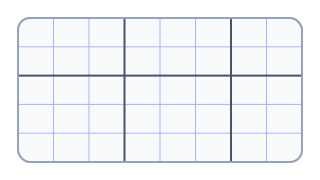
Finished Basement
40 ft × 25 ft room · 2×2 tile · 15% waste
Tiles
288
Boxes
24
Grid Order
24 main tees · 60 cross tees · 13 wall moldings
Big basement ceilings often need more waste and a much larger grid order, so tile count alone is not enough for planning.
How to Use This Calculator
- Measure your ceiling — Grab a tape measure and get the length and width. For L-shaped rooms, break it into rectangles and add them up.
- Pick your tile size — Most drop ceilings use 2'×2' tiles. Larger 2'×4' tiles cover more area but can sag in humid spaces.
- Add waste percentage — 10% is standard. Go higher if you have lots of lights, vents, or an oddly shaped room. Trust me, running short mid-project is no fun.
- Toggle grid materials — If you're installing a new grid system, turn this on to get estimates for main tees, cross tees, and wall molding.
- Check your results — The calculator shows tiles needed plus boxes to buy. Copy the results to share with your contractor or take to the store.
How to Turn Ceiling Size Into a Material List
- Measure the ceiling area — Multiply the room length by the room width to get total square footage.
- Match the tile size — Convert the ceiling area into a base tile count using your 2×2, 2×4, or custom tile size.
- Add waste before ordering — Increase the base tile count for perimeter cuts, broken corners, lights, vents, and future replacements.
- Build the drop ceiling list — If grid is included, estimate main tees, cross tees, wall molding, and hanger wires from the same room layout.
Quick Example
- • Room: 12 ft × 10 ft = 120 sq ft
- • Tile: 2' × 2' = 4 sq ft per tile
- • Base tiles: 120 ÷ 4 = 30 tiles
- • With 10% waste: 30 × 1.1 = 33 tiles
- • At 12 tiles per box: order 3 boxes
Based on Armstrong installation guidelines and CISCA standards. Learn more →