Free Rebar Calculator

Estimate rebar bars, spacing, linear feet, weight, and optional cost for slabs, driveways, and foundations.

Last updated: March 31, 2026

Enter Your Measurements

Automatically sets recommended rebar size and spacing
Based on ASTM A615 standards
Distance between rebar bars (center to center)
Affects minimum concrete cover per ACI 318-19

Results

Buy at store: 16 × 20ft bars
Total Rebar:23 pieces
Length direction:15 pieces
Width direction:8 pieces
Linear Feet:304.25 ft (92.74 m)
Total Weight:203.24 lbs (92.19 kg)
Min. Cover:1.5"
Area:200 sq ft (18.58 m²)

Rebar should be placed in the lower third of the slab for maximum tensile strength.

Project Examples

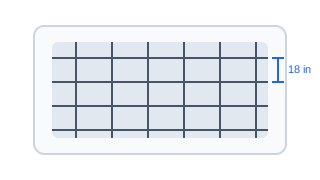
Driveway Slab rebar layout example

Driveway Slab

20 ft × 10 ft slab · #4 rebar · 18 in spacing

Total bars
22 bars
Buy at store
15 × 20 ft
Weight
197 lbs

A small driveway slab usually lands around 15 standard 20 ft bars once you convert the grid into total linear feet.
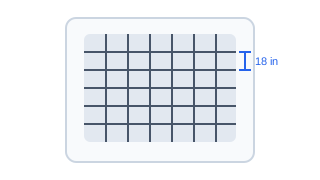
Patio Slab rebar layout example

Patio Slab

12 ft × 12 ft slab · #3 rebar · 18 in spacing

Total bars
18 bars
Buy at store
11 × 20 ft
Weight
80 lbs

A patio layout stays lighter, but the order still rounds up fast because store stock lengths are usually sold in 20 ft bars.
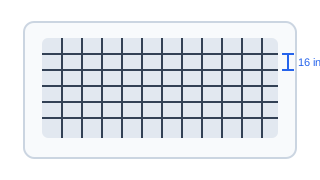
Garage Floor rebar layout example

Garage Floor

24 ft × 24 ft slab · #4 rebar · 16 in spacing

Total bars
38 bars
Buy at store
44 × 20 ft
Weight
573 lbs

Larger garage floors push both bar count and weight quickly, so it helps to estimate stock lengths before calling a supplier.

How to Use This Calculator

  1. Select your project type - Choose from driveway, patio, foundation, or custom. This automatically sets recommended rebar size and spacing.
  2. Enter area dimensions - Measure your slab length and width in feet. For circular slabs, enter the diameter.
  3. Choose rebar size - #3 or #4 for residential slabs, #4 or #5 for driveways and foundations. The calculator shows weight per foot for each size.
  4. Set spacing - Standard spacing is 12-18 inches on center. Per ACI 318, maximum spacing is 3× slab thickness or 18", whichever is smaller.
  5. Select exposure condition - This determines the minimum concrete cover required to protect the rebar from corrosion.

How to Turn Slab Size Into a Rebar Order

1. Measure the slab or footing dimensions.
2. Divide each span by your spacing to get bar rows.
3. Convert the layout into total bars and linear feet.
4. Turn total length into weight and optional cost.

Quick Example:

  • • Slab: 20 ft × 10 ft = 200 sq ft
  • • Rebar: #4 (0.668 lb/ft)
  • • Spacing: 18" (1.5 ft) on center
  • • Cover: 1.5" (outdoor exposure)
  • • Length direction: 20 ÷ 1.5 + 1 = 14 bars
  • • Width direction: 10 ÷ 1.5 + 1 = 8 bars
  • • Total: 14 + 8 = 22 bars
  • • Linear feet: (14 × 9.75) + (8 × 19.75) = 294.5 ft
  • • Weight: 294.5 × 0.668 = 197 lbs

Rebar per Square Foot (Quick Reference)

  • 12\" spacing: ~2 linear ft/sq ft
  • 16\" spacing: ~1.5 linear ft/sq ft
  • 18\" spacing: ~1.33 linear ft/sq ft
  • 24\" spacing: ~1 linear ft/sq ft

Spacing Guidelines for Concrete Slabs

  • Residential slabs: 18-24 inches center to center (both directions).
  • Expansive soil: Use 16-inch spacing for better crack control.
  • ACI 318 max: 3× slab thickness or 18\", whichever is smaller.

Rebar Cost Guide

Rebar typically costs $0.75-$1.40 per linear foot depending on size (#3, #4, #5) and location. Add 10-15% for overlaps. Use our calculator above to get total linear feet, then multiply by your local price.

Rebar spacing and cover requirements per ACI 318-19 standards. Rebar specifications per ASTM A615. Learn more about ACI standards

Frequently Asked Questions

Related Calculators